ESIT2022
EARTH & SPACE: FROM INFRARED TO TERAHERTZ INTERNATIONAL CONFERENCE
September 17 - 19, 2022
Nantong, China

Manijeh Razeghi
Northwestern University
Title: Quantum semiconductor Materials Science and their applications
Abstract: Nature offers us a full assortinent of atoms, but Quantum engineering is required to put them together in an elegant way to realize functional structures not found in nature.
A particular rich playground for Quantum era, is the so-called III-V semiconductors, made of atoms from columns III and V of the periodic table, and constituting compounds with many useful optical and electronic properties. Guided by highly accurate simulations of the electronic structure, modern semiconductor quantum devices are literally made atom by atom using advanced growth technology to combine these materials in ways to give them new proprieties that neither material has on its own. Modern mastery of atomic engineering allows high-power and highly efficient functional devices to be made, such as those that convert electrical energy into coherent light or detect light of any wavelength and convert it into an electrical signal.
This talk will present the future trends and latest world-class research breakthroughs that have brought semiconductor quantum engineering to an unprecedented level, creating IR light detectors and emitters over an extremely wide spectral range from 0.2 to 300 microns. As well as their integration with Si photonics.
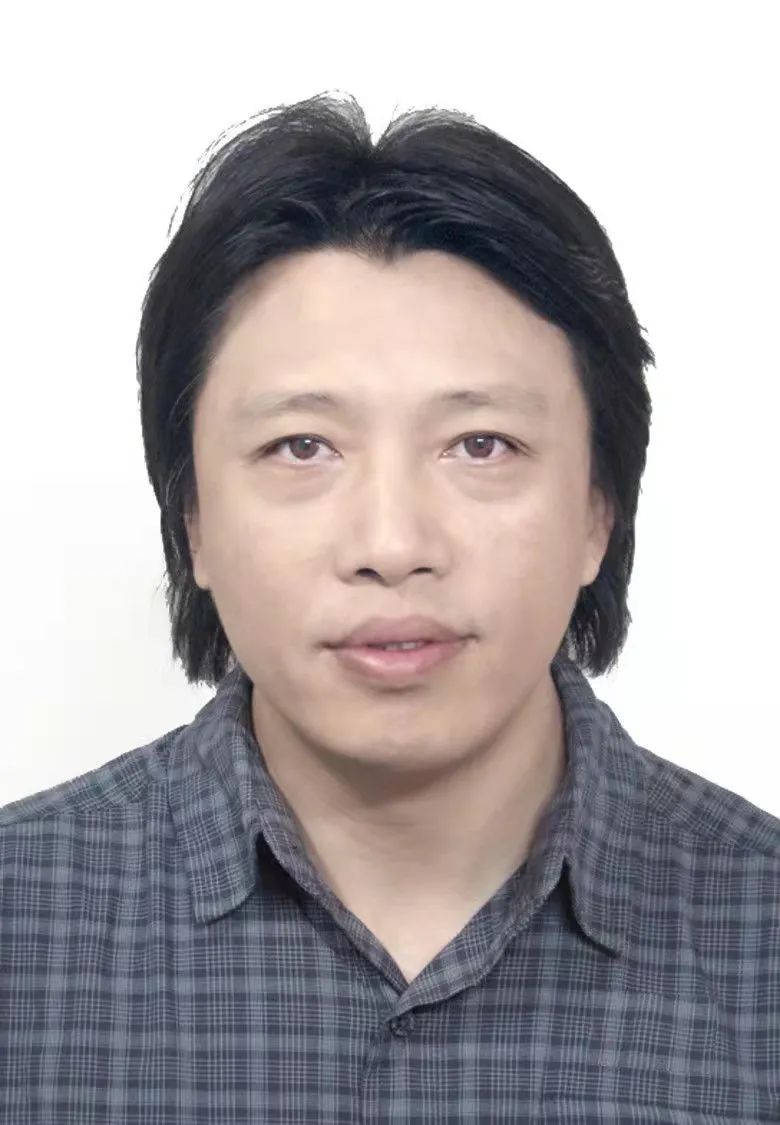
ShengCai Shi
Purple Mountain Observatory, Chinese Academy of Sciences
Title: Superconducting detectors for terahertz astronomy
Abstract: The terahertz (THz) regime occupies approximately half the photon energy in the universe. It is a unique frequency band as radiation from early distant, cold, and dusty objects, which are invisible in the optical/NIR regime, can be observed. Furthermore, there are plenty of molecular rotation lines and atomic fine structure lines in this regime, which are important tracers for studying the physical and chemical properties of celestial objects such as stars and planetary systems. With sensitivity approaching the quantum limit for coherent detection and the background limit for incoherent detection, superconducting detectors are playing an increasingly important role in THz astronomy. This talk will focus on recent development of THz superconducting detectors, related astronomical observations such as black-hole imaging, and THz astronomical projects in China.

Jun Li
National Satellite Meteorological Centre
Title: Remote sensing and application of three-dimensional atmosphericprofiles from hyperspectral infrared sounder measurements
Abstract: The United States, Europe and China have successively developed space-based hyperspectral infrared atmospheric sounders. Measurements from those sounders have been widely used by operational and scientific communities, and have played an important role in weather situation awareness and early warning, numerical weather prediction (NWP), environmental and climate monitoring, etc. This presentation overviews the key scientific problems
and solutions in hyperspectral infrared sounder data assimilation and three-dimensional atmospheric souning retrieval, including inversion theory and retrieval methodology, handling surface and cloud in data assimilat10n and retrieval of atmospheric vertical profile, development of accurate and efficient scientific algorithms for quantitative applications in real-time, and discusses the future research focus in the quantitative application of hyperspectral infrared sounder observations.

Antoni Rogalski
Institute of Applied Physics, Military University of Technology
Title: Trends in performance limits of HOT infrared photodetectors
Abstact:
Infrared (IR) photon detectors operating in the middle (MWIR, 3—5 mm) and long wavelength (LWIR, 8—14 mm) of the IR spectral range require cryogenic cooling to achieve useful performance. The need for cooling is a major limitation of IR photon detectors what prevents more widespread use of IR technology. Currently, uncooled thermal detector focal plane arrays are successfully used in staring them叫imagers. However, the performance of thermal detectors is modest, they suffer from slow response and they are not very useful in applications requiring multispectral detection.
Initial work on high operating temperature (HOT) photon detectors focused on HgCdTe photoconductors and photoelectromagnetic detectors. More recently, technological efforts have been directed towards advanced heterojunction HgCdTe photodetectors. In this paper, a number of new concepts for improving the performance of photon detectors operating at room temperature are presented. Several types of detector materials have been considered: HgCdTe, type II Amsuperlattices, two-dimensional materials and colloidal quantum dots.
At the current stage of HgCdTe technology development, the Rule 07 metric is not a good approach for predicting the performance of HgCdTe detectors and systems and as a benchmark for alternative technologies. It is shown that a depletion-limited HgCdTe photovoltaic detector can achieve background-limited performance in the long-wave infrared spectnun at room temperature. In this context, alternative technologies are considered. It has been shown that it will be rather difficult to rival 2D material and colloidal quantum dot photodetectors with HgCdTe photodiodes. The above estimates provide further encouragement for low-cost and high-performance HgCdTe MWIR and LWIR focal arrays operating at HOT conditions.

Shanghai Institute of Technical Physics, Chinese Academy of Sciences

Institute of Optoelectronics, Fudan University

Professional Committee of Infrared and Optoelectronic Devices, Chinese Optical Societ

Innovation Center for FengYun Meteorological Satellite (FYSIC)