ESIT2023
THE SECOND INTERNATIONAL CONFERENCE ON EARTH & SPACE: FROM INFRARED TO TERAHERTZ 2O23
September 22 - 24, 2023
Shanghai, China
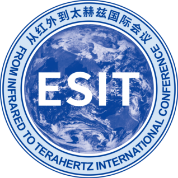

Antoni Rogalski
Military University of Technology
Title: Infrared HOT Photodetectors in the Next Decade
Abstract: At the current stage of infrared (IR) detector technology development, only thermal detectors operate at room temperature. In general, however, their performance is modest; thermal detectors suffer from slow response and are not very useful in multispectral detection. On the other hand, in order to achieve better performance (higher detectivity, better response speed, and multispectral response), IR photon detectors require cryogenic cooling. This is a major obstacle to the wider use of IR technology. For this reason, significant efforts are being made to reduce size, weight and power consumption (SWaP), resulting in lower IR system cost and higher operating temperature.
Currently focused efforts are aimed at developing photon-based infrared detectors whose performance is limited by background radiation noise. These requirements are formalized in the Law 19 paradigm for p-i-n HgCdTe photodiodes. In this paper various material systems [including HgCdTe photodiodes, type-II AIIIBV superlattices, two-dimensional (2D) materials and colloidal quantum dots (CQDs)] are considered for future high-temperature infrared (HOT) photodetectors.
Biograhy: TBA
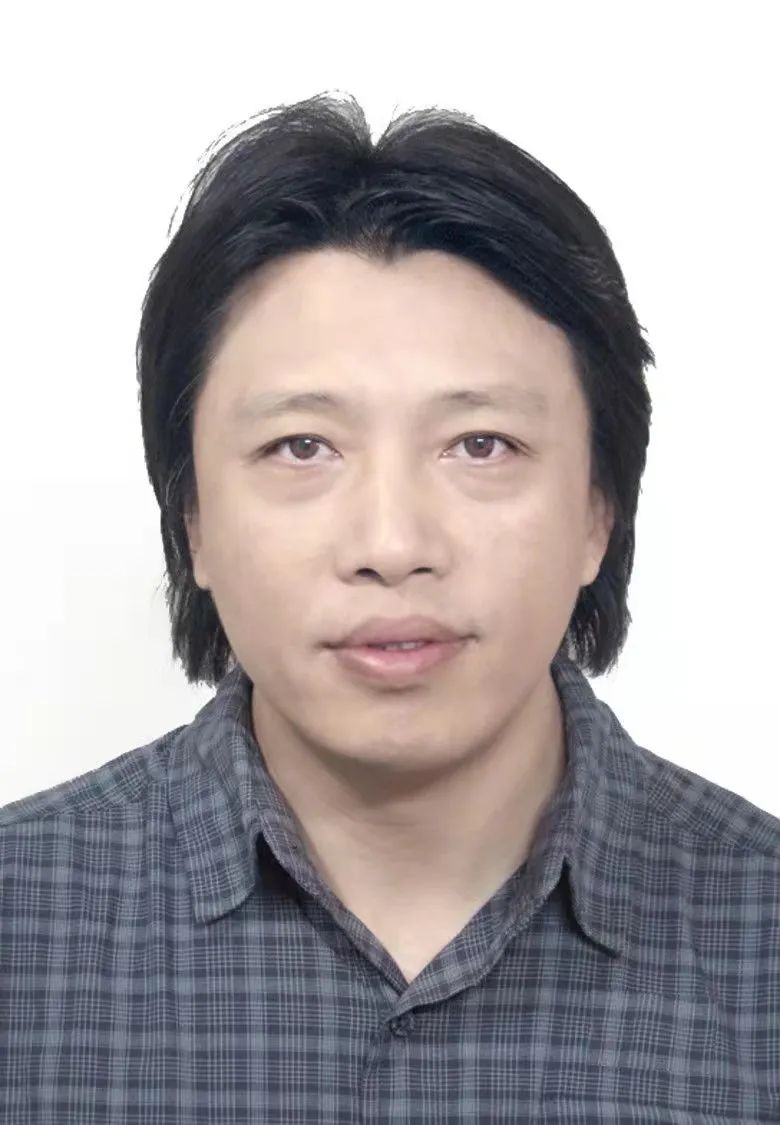
Shengcai Shi
Purple Mountain Observatory, Chinese Academy of Sciences
Title: Far-IR Detectors & Astronomical Applications
Abstract: TBA
Biography: Prof. Sheng-Cai Shi received his B.S. degree in 1985 from Southeast University (China), M.S. degree in 1988 from Purple Mountain Observatory (PMO, China), and Ph.D. degree in 1996 from the Graduate University for Advanced Studies (Japan). From 1992 to 1998, he was with Nobeyama Radio Observatory, National Astronomical Observatory of Japan (NAOJ), focusing on the development of superconductor-insulator-superconductor (SIS) mixers at mm/submm wavelengths. He has been a Professor and the Head of Mm- & Submm-Wave Lab at PMO since 1998, and is currently serving as the Chair of the Key Lab of Radio Astronomy of CAS and the Chair of the Advisory Committee of PMO. His current research interests include the physics of superconducting devices, THz mixers and detectors, and THz applications. He is a recipient of HLHL Award and was elected as an Academician of CAS in 2021.
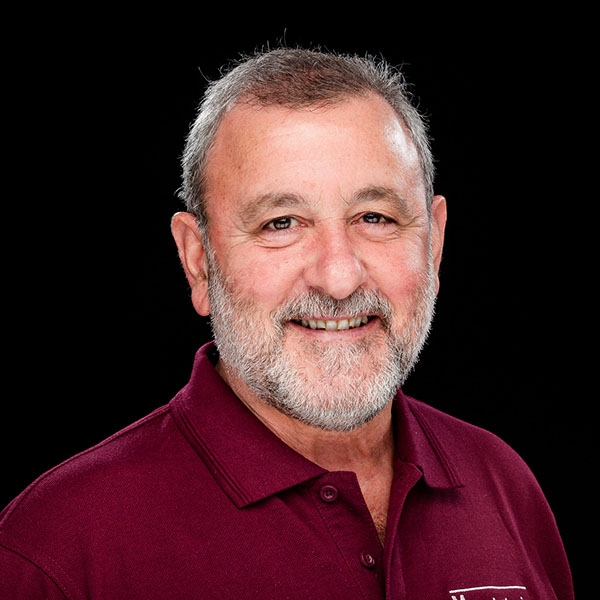
Lorenzo Faraone
University of Western Australia
Title: Technologies for High Performance Infrared Spectral Sensing and Imaging
Abstract: Infrared sensing and imaging technologies are a core capability for a broad range of applications in remote sensing and situational awareness. For high performance imaging systems this requires semiconductor-based photovoltaic detectors that have a high signal-to-noise ratio, high speed, and that can be fabricated in large format two-dimensional arrays. This presentation will focus on well-established HgCdTe-based technologies, including device design and modelling, MBE semiconductor growth, and imaging array fabrication technologies.
Infrared spectral sensing and imaging can provide additional information to traditional intensity-only spatial information, and many applications based on portable and/or airborne platforms require that this be achieved with extremely low size, weight and power (SWaP). Thus, this presentation will also describe MEMS-based tuneable filter technologies suitable for on-chip integration that can provide a low-SWaP solution for multi-spectral sensing and imaging.
Biograhy: Lorenzo Faraone is a Member of the Order of Australia (AM), and a Fellow of the IEEE (FIEEE), the Australian Academy of Science (FAA) and the Australian Academy of Technological Sciences and Engineering (FTSE). He has published more than 300 international journal papers on his research work, and supervised more than 40 PhD student completions. Prior to joining UWA, he worked in the area of silicon CMOS-based microelectronics and non-volatile memory technology with RCA Labs in Princeton, USA. Since joining UWA he has worked primarily on HgCdTe MBE growth, HgCdTe-based infrared sensor and imaging array technologies, optical MEMS technologies for infrared spectral sensing and imaging applications, and mobility spectrum analysis techniques for magneto-transport studies in semiconductor device structures.
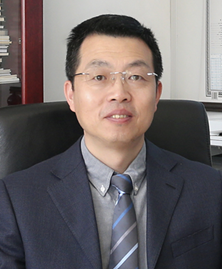
Peng Zhang
General of National Satellite Meteorological Center (NSMC/CMA)
Title: Infrared Remote Sensing in Fengyun Satellites: History, Current Status and Future
Abstract: One of the historic and classical application of the satellite-based infrared remote sensing is the atmospheric sounding. The concept of using satellite infrared (IR) radiation measurements to retrieve atmospheric temperature was first proposed by King (1956). Kaplan (1959) noted that the radiation from different spectral regions comes from different atmospheric layers, which can be used to retrieve the atmospheric temperature at different heights. With the improvement in the spectral resolution, spectral coverage, instrument sensitivity and calibration accuracy, the satellite-based infrared remote sensing technique can be used not only to retrieve the temperature and moisture vertical profile, but also to retrieve the atmospheric composition content, such as CO2, CH4, etc. Since 1980s, the Chinese scientists have been working on the prototype of space-based infrared spectrometer for the atmospheric sounding. In 2008, the first Chinese infrared spectrometer, InfraRed Atmospheric Sounder (IRAS) mounted on FY-3A was deployed on the orbit. The IRAS was upgraded to Hyperspectral InfraRed Atmospheric Sounder (HIRAS) since FY-3D in 2017. The first hyperspectral infrared sounder on the geostationary satellite, Geostationary Interferometric Infrared Sounder (GIIRS) was deployed on the orbit in 2016 with the successful launch of FY-4A. This presentation will review the history of atmospheric infrared sounding technique on FY-3 polar satellite and FY-4 geostationary satellite. The status and the applications of HIRAS/FY-3 and GIIRS/FY-4 will be introduced. In the last part, the benchmark of the space-based infrared spectral measurement is required and space-based SI-traceable technique will be discussed.
Biography: Peng Zhang, Ph.D, Senior Scientist. Deputy Director–General of National Satellite Meteorological Center (NSMC/CMA) since 2013, Chief Director of FY-3 ground segment since 2013, Chair of Global Space Inter-Calibration System (GSICS) Executive Panel from 2014 to 2017, Satellite Coordinator of World Meteorological Organization (WMO) Infrastructure Commission (INFCOM) since 2020.
Dr Zhang got his Master degree at AIOFM/CAS (Anhui Institute of Optics and Fine Mechanics, Chinese Academy of Sciences) for atmospheric optics in 1995 and his Ph.D at IAP/CAS (Institute of Atmospheric Physics, Chinese Academy of Sciences) for atmospheric physics in 1998.
Dr. Zhang intensively involved in conceiving, developing, and operating Chinese meteorological satellite program and ground segment. With his leadership, the early-morning orbiting satellite FY-3E and the precipitation measurement satellite FY-3G has been deployed in 2021 and 2023. China has become the only country in the world which operates meteorological satellites in four near-earth orbits. Fengyun observation system is becoming increasingly perfect, and the accuracy of radiometric calibration is improving progressively which dramatically ramp up the capability on the numerical weather prediction, severe weather monitoring, meteorological disaster prevention and reduction, etc.
His research experience covers the atmospheric remote sensing, satellite calibration and validation, and atmospheric radiative transfer calculation, etc. He has authored and coauthored over 200 papers published in refereed scientific journals to date, in addition to editing 4 Books and many book chapters and technical reports.

Shanghai Institute of Technical Physics, Chinese Academy of Sciences
Hangzhou Institute for Advanced Study of UCAS

Institute of Optoelectronics, Fudan University
Innovation Center for FengYun Meteorological Satellite (FYSIC)

State Key Laboratory of Infrared Physics
Editorial Office of Journal of Infrared and Millimeter Waves
Journal of Infrared and Millimeter Waves
Infrared Technology
INFRARED
| Contact us Mobile: +86-18721506587
Tel: 021-25051554
Email: esit@mail.sitp.ac.cn |